Strength that keeps
you capable.
Muscle is one of the best predictors of how well you age. Training builds it, and healthy hormone levels help you keep it. We look at both: your bloodwork and whatever is holding your progress back.

Built on your bloodwork, not guesswork.
- Baseline labs. We measure free and total testosterone, SHBG, estradiol, LH, FSH, hematocrit and PSA.
- A plan that fits. That could be TRT, the MaxsTim™ Protocol if you want to keep your own production, or peptides for recovery and body composition.
- Monitored. Follow-up labs track your testosterone, hematocrit and PSA so your progress stays safe.
Training that keeps you strong.
The testosterone bump after a workout fades within the hour, and it doesn’t decide how much muscle you build. Consistent, progressive training does. Four principles matter most:
-
01
Prioritize compound lifts.
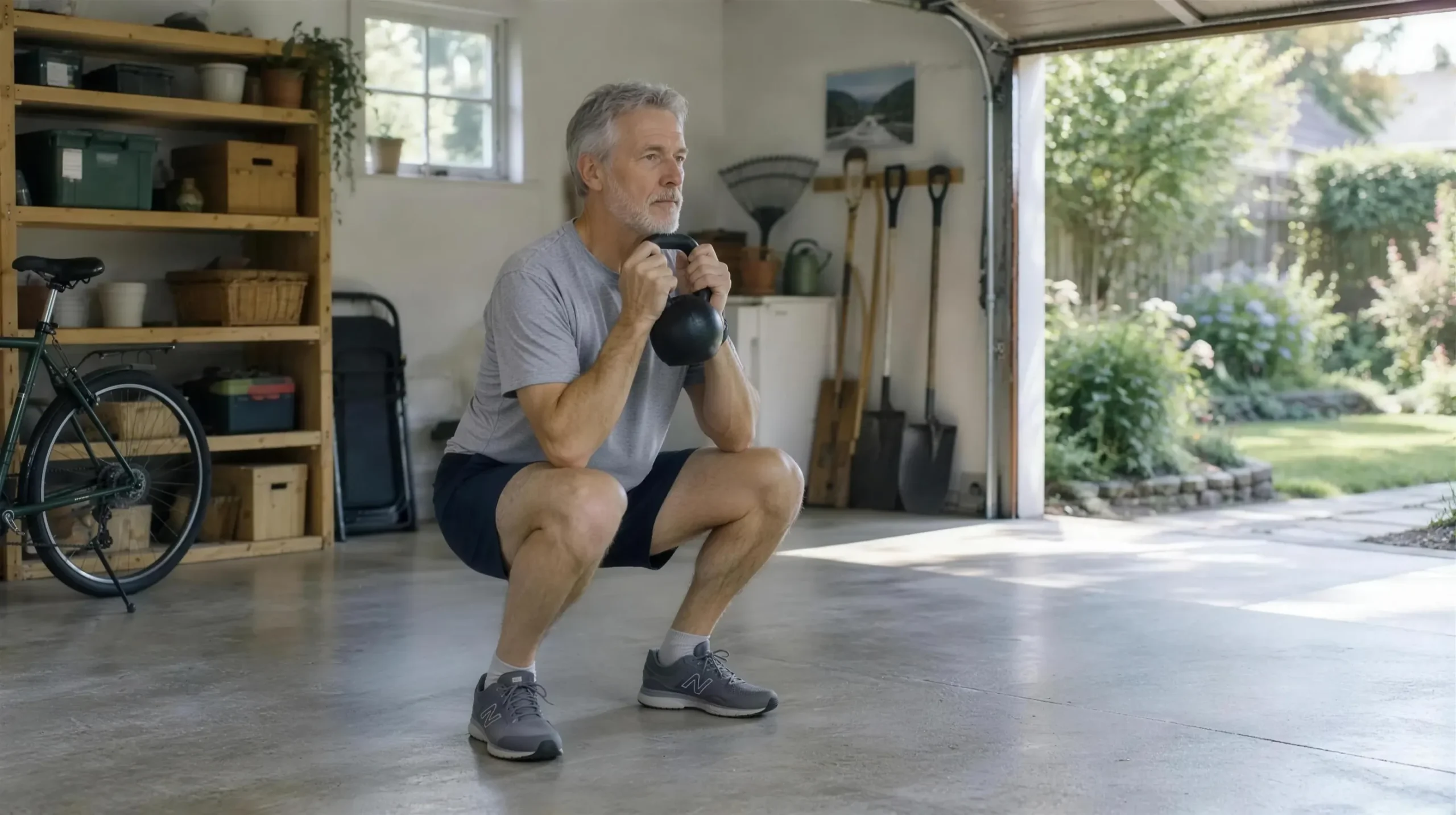
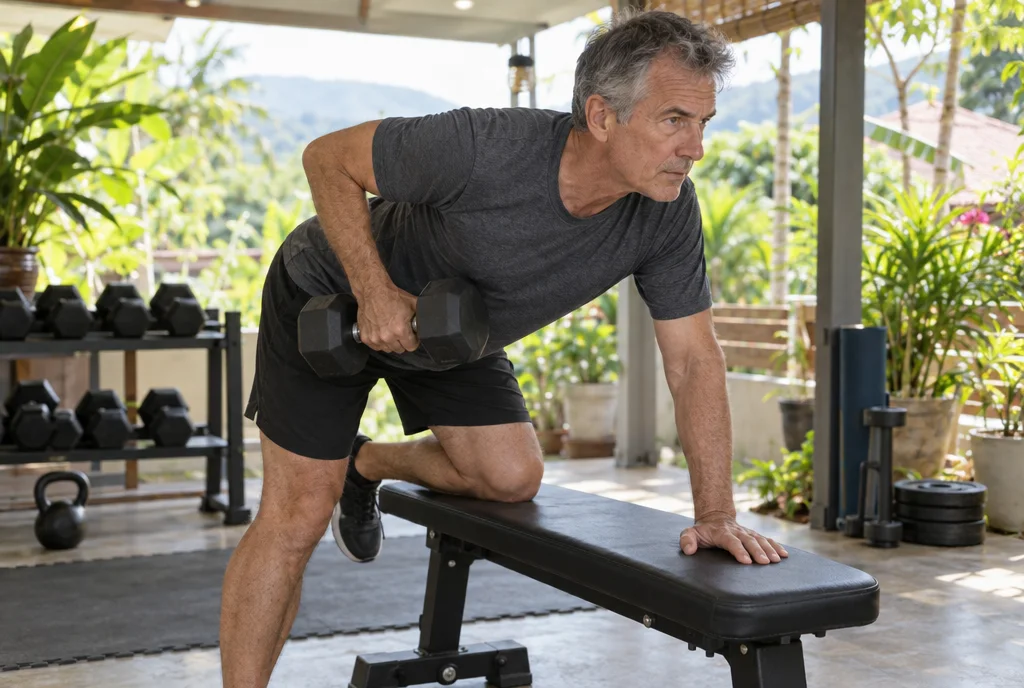
Squats, deadlifts, presses and rows work more muscle per rep. They build the strength you use every day.
-
02
Train with real effort.
Pick a weight that makes the last couple of reps hard while your form stays clean, then add load gradually.
-
03
Rest long enough to lift well.
Take 2 to 3 minutes between heavy sets so you can keep the weight up. Shorter rests suit lighter accessory work.
-
04
Build your foundation before your max.
On a hormone optimization program, energy, drive and muscle often respond within weeks. Results vary by individual.* Tendons and ligaments adapt much more slowly, over months, and more slowly still as you age. You may feel ready to lift heavier before your connective tissue is. Increase your loads gradually, even when you feel stronger, so your progress lasts.
Over time, training helps your hormones too. Losing excess body fat and improving insulin sensitivity are both linked to higher resting testosterone. We aren’t personal trainers, but we’ll tell you if anything in your labs or health history should change how you train.
More than muscle: bone, blood and fat.
Muscle. Testosterone binds androgen receptors inside muscle cells, switching on the genes that drive muscle protein synthesis. It also supports the growth hormone and IGF-1 axis, which helps recovery.
Bone. Testosterone helps maintain bone density, partly through its conversion to estradiol. Men with low testosterone have higher rates of osteoporosis and fracture.
Blood. Testosterone stimulates red blood cell production. That’s why we check hematocrit at every follow-up and adjust before it becomes a problem.
Fat. Low testosterone and belly fat feed each other. Fat tissue converts testosterone to estradiol, and low testosterone makes fat easier to gain. Breaking that loop is often where progress starts.
Talk to us before you come off.
After long-term anabolic steroid use, stopping abruptly can leave your testosterone very low for months. Read about our PCT & Hormone Recovery and FAR™ programs, then talk to our doctors before you stop.
Build a plan around your goals.
Tell us where you are now and where you want to be. We’ll help you get there safely.
- Bangkok: +66 97-240-5686 · LINE · WhatsApp
- Pattaya: +66 82-988-3515 · LINE · WhatsApp
- Mon–Sat, 8 AM–5 PM · Closed Sun
Frequently asked questions
Questions about strength and hormones. Can’t see yours? Ask us at your free consultation.
Book a free consultationWhat training works best as I get older?
Compound lifts, gradually heavier loads and enough rest between sets. Add some cardio for your heart.
Does lifting raise testosterone?
Briefly, yes, but the spike is short-lived. Long term, training helps mostly by cutting body fat and improving metabolic health. If your levels are clinically low, training alone rarely fixes it. That’s what testing is for.
How heavy should I lift at my age?
Heavy enough to be challenging with good form. Tell us about any heart, blood pressure or joint issues, and we’ll flag anything that should limit you.
Can I train hard while on TRT?
Yes, with monitoring. We track hematocrit, estradiol and PSA so you can train without guessing. Go slowly at first. Your muscles will respond faster than your tendons.
I’ve used anabolic steroids. What should I do before coming off?
Talk to our doctors first. Coming off after long-term use needs a plan. See PCT & Hormone Recovery and FAR™.
Is the first consultation free?
Yes. Walk in or book ahead, and bring any recent labs.
Stay strong for the decades ahead.
Book a free consultation at whichever clinic is closer.